At Dislaub, we supply regenerated alcohols and solvents to demanding sectors such as perfumery, pharmaceuticals, chemicals and battery manufacturing. These are different worlds, but they all have one thing in common: our products are an essential raw material for them. Due to their strategic position, our products are also responsible for the GHG emissions counted in their Scope 3 (indirect emissions related to their supply chain and suppliers).By relying on the rigorous methodology of life cycle analysis according to the ISO 14067 standard, we know how to measure the carbon footprint of our products at each stage of their manufacturing processes.
The results are spectacular. Using regenerated solvents results in a 60-90% reduction in the carbon footprint compared to market references from fossil materials. Overall, 64,000 tonnes of CO₂ are avoided each year compared to conventional production methods.
“Nowadays, it is not uncommon for customers to ask us for a carbon footprint certificate for the solvent we regenerate. Using our reference system, we were able to provide a precise figure. We can do this for all our products and all our customers who request it. This gives them a real advantage in terms of their carbon performance," explains Éric Calvet, Dislaub's director.
Assets that make the difference
How can these results be explained? Firstly, it is due to the nature of our activity: regenerating a solvent or recycling an alcohol requires much less energy than synthesising them from fossil materials. However, our company also has other assets that are rare in our industry.
The site's 16 facilities are each dedicated to producing a specific type of product. This organisation enables continuous operation without any stops or restarts between productions. The result is optimised yields and reduced energy consumption per tonne produced.
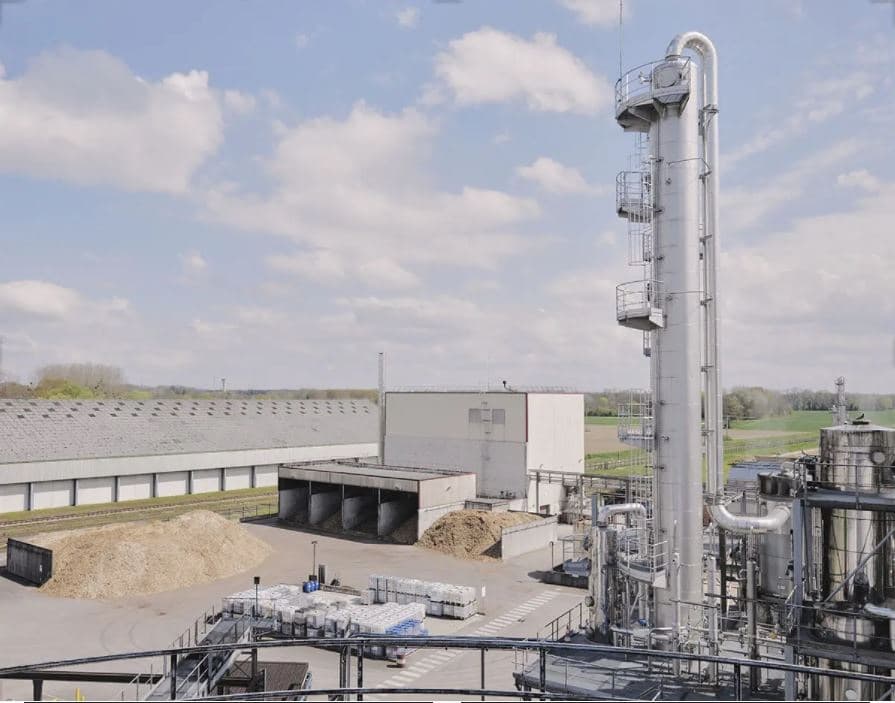
In addition, 90% of the energy needed to run the Dislaub site is provided by steam generated from a biomass boiler fuelled by local and sustainable wood chips. 'We are probably the only company in our industry with such equipment. It's a great alternative to gas ' says Éric Calvet.
Logistics also make a difference. Thanks to the on-site tank cleaning station, the tanks that deliver used solvents leave loaded with regenerated product. There are no empty tanks or detours to an external cleaning station. Around a hundred tanks are treated on site each month, avoiding many trips and the emissions associated with them. We can also provide transport using advanced fuels such as OLEO 100, which reduces the carbon footprint even further.
A dynamic of continuous improvement
This virtuous trajectory continues on other fronts. For example, the site's water consumption decreased by 28% between 2018 and 2024. We should be able to halve our consumption by a further half, according to a project scheduled for 2026-2027. This project is to reuse the water treated by the water treatment plant. As for the organic residues extracted during purification, they are recovered as fuel in cement plant kilns.
We have invested heavily over the past few years to reduce the carbon footprint of the Dislaub site. In the coming months, we will recalculate our LCAs based on data from 2025. We intend to build on these efforts to better satisfy our customers.